The 4 Types of Parenting Styles
Positive parenting leads to positive futures for generations to come.
American SPCC provides parenting education and support as the most effective way to support families and nurture children.
The following resources are made possible through contributions by child and family advocates like you.


Do you ever wonder what type of parent you are?
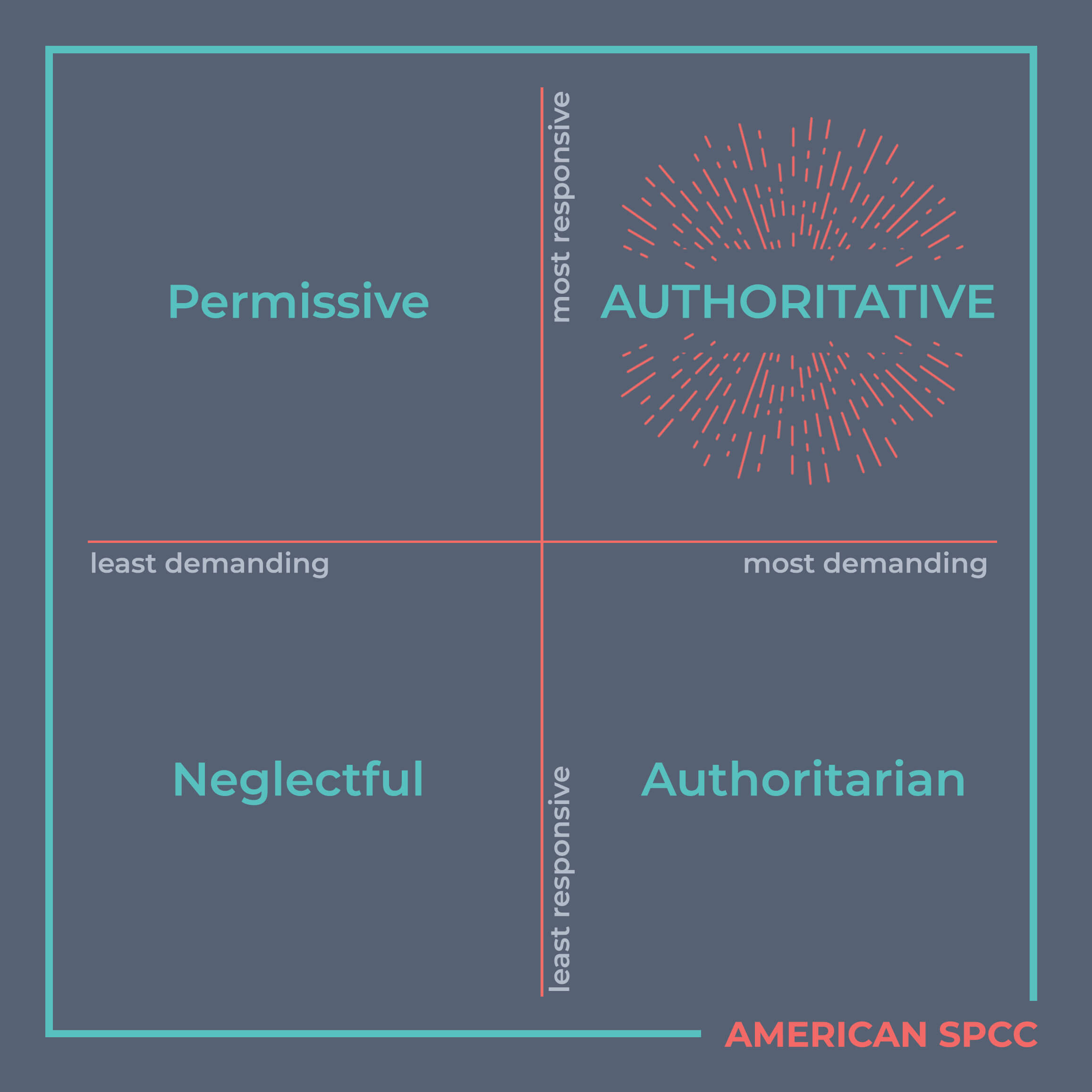
According to studies conducted by developmental psychologist Diana Baumrind in the 1960s and adjusted by subsequent researchers, there are four distinct types of parenting styles – permissive, authoritarian, uninvolved/neglectful, and authoritative. Each one of these requires varying levels of responsiveness and demandingness from the parent or caregiver.
Psychologists and parenting experts still refer to these four types today as a way to describe the effects that different parenting styles may have on a child’s behavior, as well as their mental and physical health.
Most parents and caregivers won’t fit inside one specific label and may see their style reflected in all four categories. These categories describe the possible effects of different parenting approaches, but should not be used to suggest that one type should be used in every situation (although most researchers agree there are little to no benefits to “uninvolved” parenting).
Many parents will bounce between styles, depending on the situation. This is absolutely normal and expected. In the end, understanding these general categories and their outcomes can be a useful tool for parents and caregivers who want to grow their parenting skills and find ways to best support their children.
Below are the four types of parenting styles, what they sound like in practice, and their researched outcomes on children.
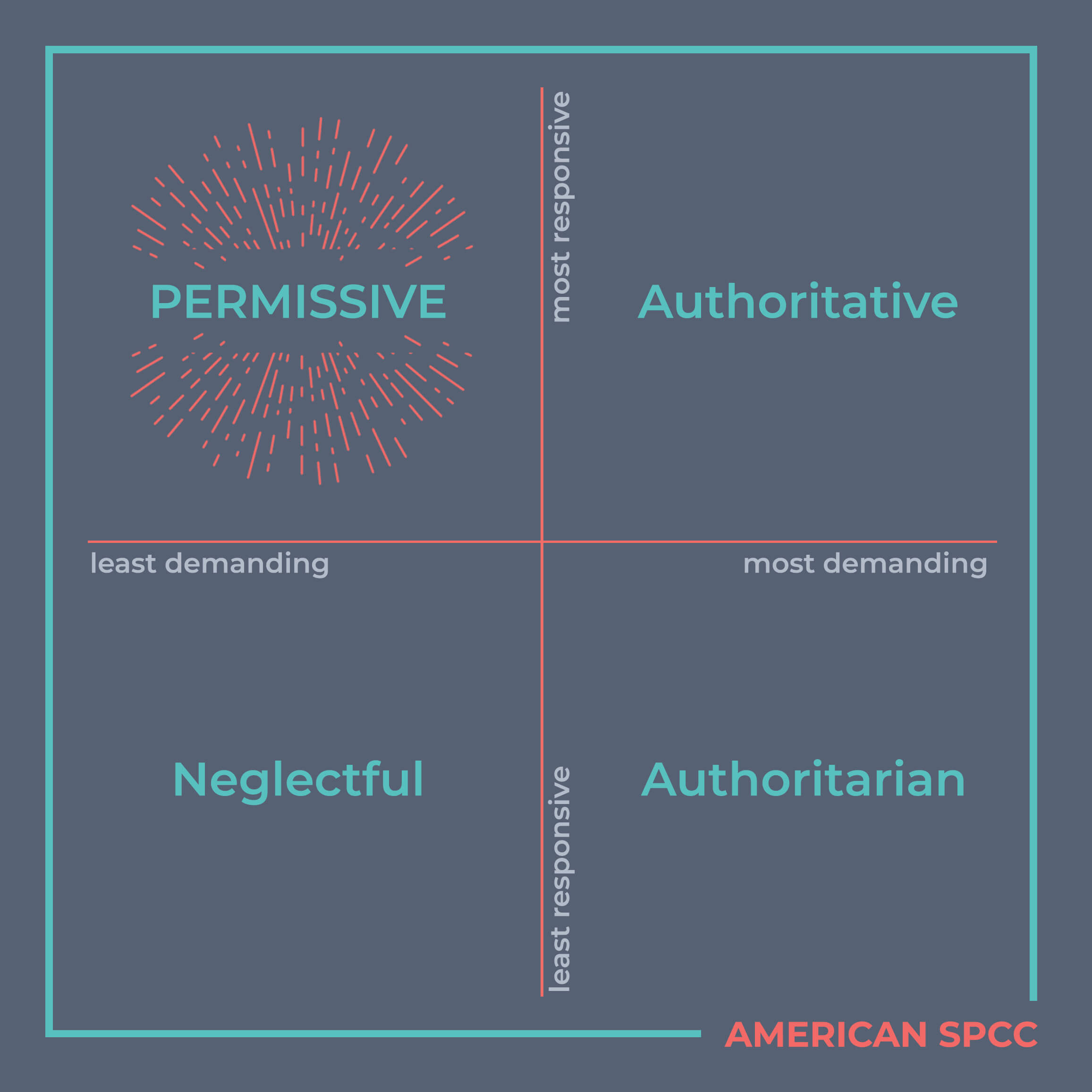
What is Permissive Parenting?
Permissive parents are worried about if their kids like them. They set few rules and enforce them even less often. Indulgent parents consider themselves friends more than role models and often don’t monitor or discipline their children. These parents are less likely to enforce schedules, snacking rules or chores. This can lead to children being forced to make choices for themselves when they’re still very little and don’t necessarily know what’s best for them. They very well might choose to eat two chocolate sundaes for breakfast and be allowed to.
Permissive parents won’t let their kids struggle and often overly protect their children from natural consequences.
What it sounds like:
“Whatever you want.”
“It’s up to you.”
Outcomes
Children benefit from the nurturing aspect of permissive parents, but they’ll struggle in the real world. If they’re not used to the consequences of their actions it can lead to children struggling with boundaries, rule-following and self-control. On the plus side, these kids tend to be more creative and unafraid to speak their minds.
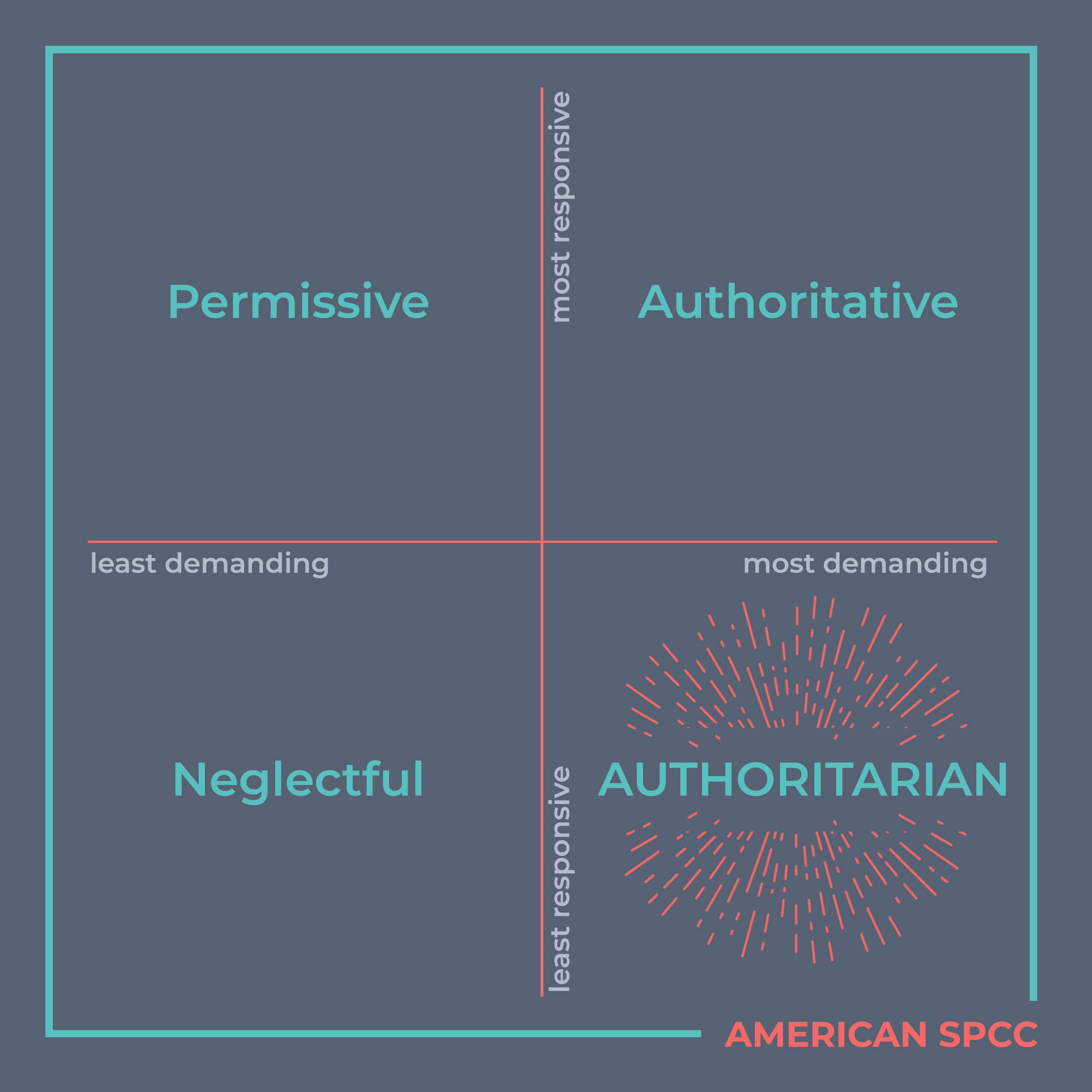
What is Authoritarian (or Disciplinarian) Parenting?
We all know a strict parent. Maybe we’re one of them. Maybe we were raised by one. Authoritarian parents have high expectations, firm rules and strict punishments. Unlike authoritative parents, disciplinarian parents expect blind obedience and don’t discuss their reasoning with their kids. These parents are highly involved, but their kids often draw away from them because of their one-way communication and stern discipline.
What it sounds like:
“Because I said so.”
“You have to.”
Outcomes
Children from authoritarian backgrounds are more likely to rebel and go behind their parent’s back. The high expectations can lead to self-esteem issues and make children feel like they’re never enough. But authoritarian parenting isn’t all bad. Children tend to be disciplined and high achievers and are less likely to make impulsive decisions.
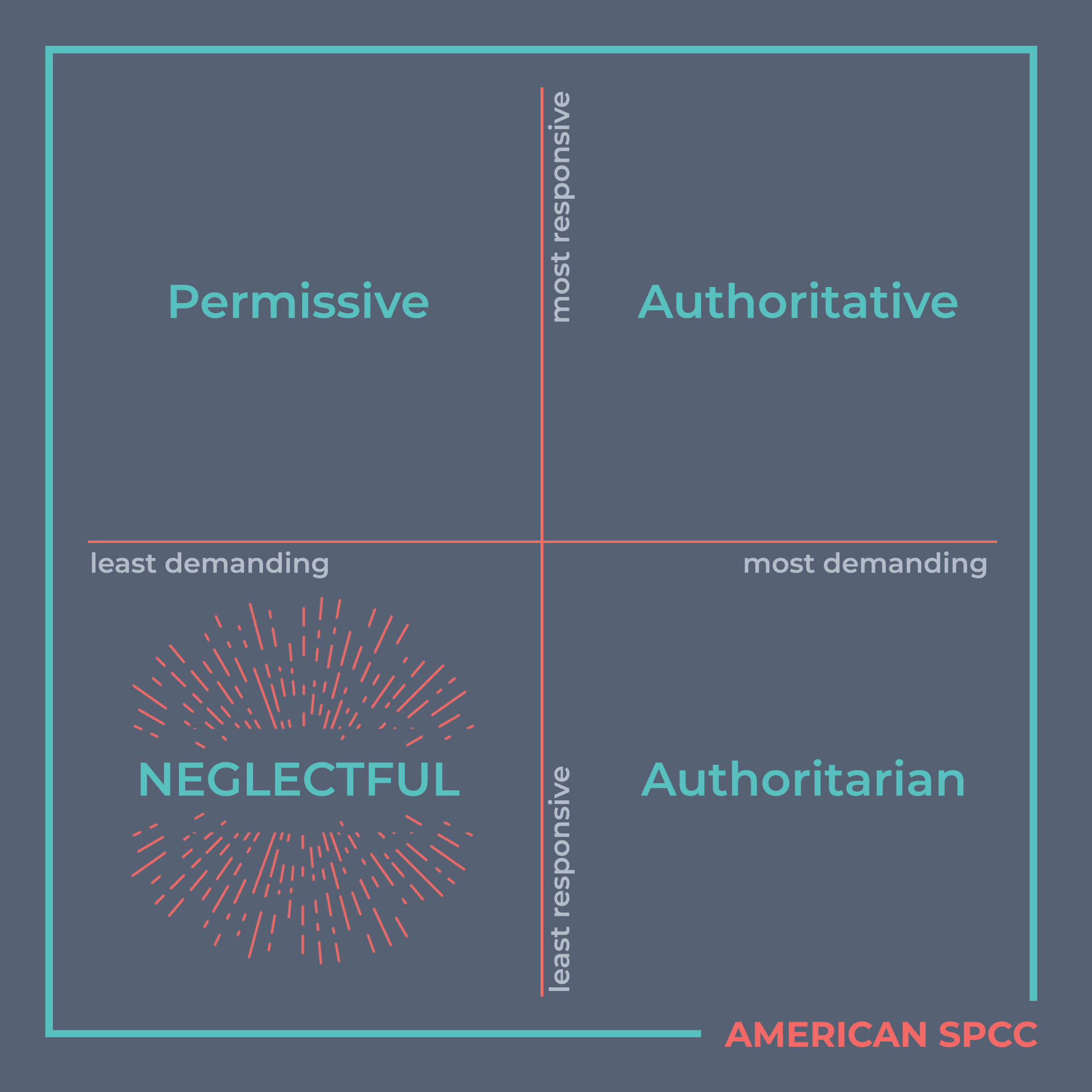
What is UNINVOLVED /NEGLECTFUL Parenting?
Uninvolved parenting is the opposite of authoritarian parenting. These parents aren’t strict and don’t have high expectations for their kids, but it’s because they don’t care. No rules, no responses, and indifference are typical for the uninvolved or neglectful parent. Typically, this parent is fighting their own mental health issues.
What it sounds like:
“Whatever…it’s not my problem.”
Outcomes
Children who have uninvolved parents often struggle with low self-esteem, impulsivity and mental health issues. Most researchers agree that there are no benefits to this style of parenting.
What is Authoritative Parenting?
Authoritative parents are highly involved and have high expectations for their kids. They have rules and boundaries and explain why. These parents balance their expectations with affection and support. They enforce rules and consequences when rules are broken. Everything is discussed to make sure the children have the chance to understand why they are being disciplined. Authoritative parents help their children make age-appropriate choices but value their kid’s autonomy from a young age.
Children learn early how to deal with conflict and grow up to be resilient adults.
What it sounds like:
“I know that you don’t want to do this. But it’ll be easier once you’re done, and you’ll have more time to play.”
Outcomes
Research shows that kids with authoritative parents have the best outcomes. Children tend to be happiest and self-confident while being goal-oriented, curious and self-reliant. Because their parents were highly involved while respecting independence, children learn how to have healthy relationships and attachment styles.

Image from Deposit Photos / Family Stock Photo
Understanding the four parenting styles—authoritative, authoritarian, permissive, and uninvolved—helps in recognizing how different approaches to discipline, warmth, and communication can impact a child’s development.
While these four parenting styles are commonly referred to in conversation, it’s important to note that they don’t encapsulate all of the different strategies available to parents.
So what should parents and caregivers make of all of this? At the end of the day, research like this can help parents and caregivers think critically about how their relationships can play an important role in their child’s ongoing development. Because when we know more, we can do more.
Resources like these are provided by American SPCC – a national nonprofit dedicated to building positive childhoods for all children by empowering parents and caregivers with research-backed education and support.
This work is made possible by passionate donors and community advocates. Learn how you can get involved and support the mission here.
Our Lessons are available for Offline learning!
Previous Section
Parenting Resource Center
The 4 Types of Parenting Styles
Next Section